
Functions of the Skin
Introduction
The skin performs several essential functions that help maintain the body's internal stability and protect it from the external environment. In addition to covering the body, it acts as a protective barrier, helps regulate temperature, detects sensations and contributes to vitamin D synthesis.
These functions depend on the coordinated activity of the epidermis, dermis, sensory receptors, blood vessels and skin glands.
1. Protection
One of the most important functions of the skin is to protect the body against external threats.
The epidermis forms a physical barrier that helps prevent the entry of microorganisms and reduces excessive water loss. Keratin strengthens the outer epidermal cells, while lipids between these cells help maintain the skin's water barrier.
Melanin, produced by melanocytes, helps protect skin cells from ultraviolet (UV) radiation.
The skin also provides a degree of protection against minor mechanical injuries and certain environmental chemicals.
Real-life example: Intact skin helps prevent bacteria from entering the body through everyday contact with objects and surfaces.
2. Regulation of Body Temperature
The skin helps maintain a relatively stable body temperature through sweating and changes in blood flow.
Sweating
Sweat glands produce sweat that reaches the skin surface. When sweat evaporates, it removes heat from the body and helps cool it down.
Changes in Skin Blood Flow
Blood vessels in the dermis can widen or narrow.
Vasodilation: Blood vessels widen, increasing blood flow near the skin surface and promoting heat loss.
Vasoconstriction: Blood vessels narrow, reducing blood flow near the skin surface and helping conserve heat.
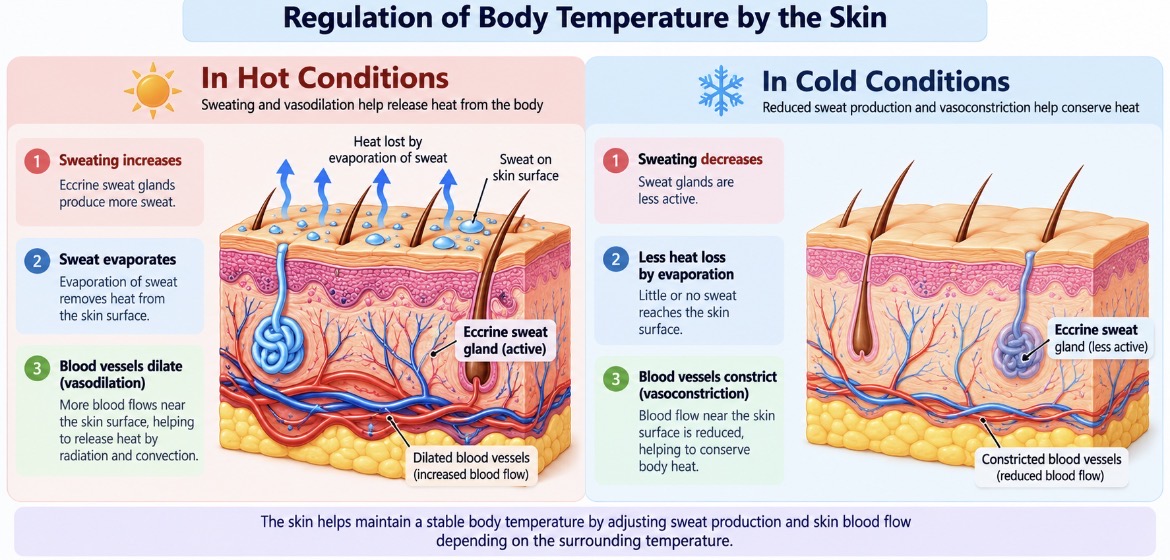
Real-life example: During exercise, sweating increases and skin blood vessels dilate, helping the body release excess heat.
3. Sensation
The skin contains sensory receptors and nerve endings that detect changes in the environment. These receptors send signals to the nervous system, allowing the body to respond appropriately.
Different receptors are associated with different sensations:
Touch: Helps detect contact with objects.
Pressure: Detects mechanical force applied to the skin.
Temperature: Helps detect warmth and cold.
Pain: Signals potentially damaging stimuli.
Some sensory receptors are specialized for particular stimuli, while free nerve endings contribute to sensations such as pain and temperature.
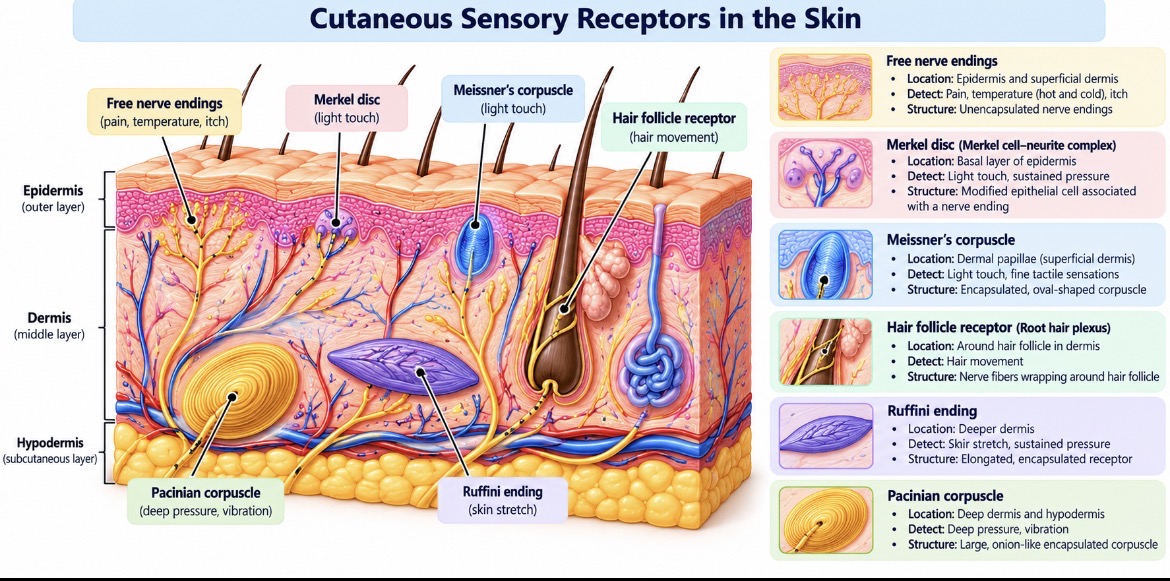
Real-life example: When you touch a hot cup, sensory receptors detect the heat and help initiate a protective response.
4. Vitamin D Synthesis
The skin plays an important role in the production of vitamin D.
When skin is exposed to suitable ultraviolet B (UVB) radiation, a substance called 7-dehydrocholesterol in the epidermis is converted into previtamin D₃. This then forms vitamin D₃, which undergoes further processing in the liver and kidneys.
Vitamin D supports calcium and phosphate balance and contributes to normal bone health.
The amount produced depends on several factors, including UVB exposure, skin pigmentation, clothing, season and geographical location.
5. Prevention of Water Loss
The skin helps prevent excessive water loss from the body through its epidermal barrier, especially the outermost layer called the stratum corneum.
This layer consists of flattened, keratin-filled cells surrounded by lipids. Together, they reduce the movement of water from deeper tissues to the external environment.
When this barrier becomes damaged, water loss can increase, and the skin may become dry, irritated or cracked.
Real-life example: Frequent exposure to harsh detergents can damage the skin barrier, causing dryness and irritation.
Tip: The stratum corneum is often described as a “brick-and-mortar” structure: the dead keratinized cells act like bricks, while the surrounding lipids act like mortar.
6. Excretion
Sweat glands release sweat containing water, salts and small amounts of certain waste products.
However, the kidneys are the primary organs responsible for removing metabolic waste and regulating the body's water and electrolyte balance. Sweating mainly supports temperature regulation rather than serving as the body's principal waste-removal mechanism.
Real-life example: During hot weather, sweating removes water and electrolytes, which is why prolonged heavy sweating may require fluid and electrolyte replacement.
Summary of the Functions of the Skin
Function | Main Mechanism | Importance |
|---|---|---|
Protection | Epidermal barrier, keratin and melanin | Protects against injury, microorganisms, water loss and UV radiation |
Temperature regulation | Sweating and changes in skin blood flow | Helps maintain body temperature |
Sensation | Sensory receptors and nerve endings | Detects touch, pressure, temperature and pain |
Vitamin D synthesis | UVB-induced conversion of 7-dehydrocholesterol | Supports calcium balance and bone health |
Prevention of water loss | Stratum corneum and epidermal lipids | Maintains hydration and barrier integrity |
Excretion | Sweat secretion | Removes small quantities of water, salts and waste products |
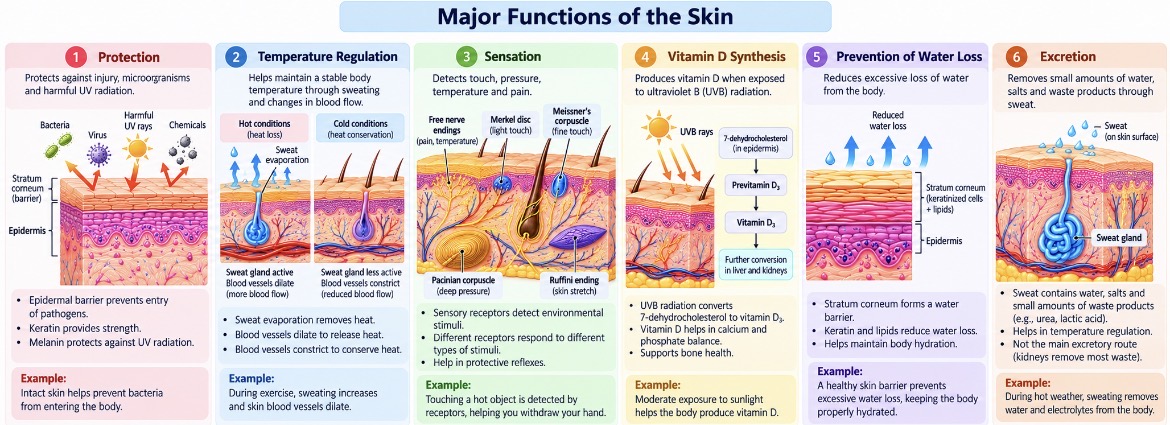
Key Concepts
The skin acts as a protective barrier against external threats.
Sweating and changes in skin blood flow help regulate body temperature.
Sensory receptors detect environmental stimuli.
UVB radiation initiates vitamin D synthesis in the skin.
The stratum corneum reduces excessive water loss.
Sweat removes small amounts of salts and waste products, but the kidneys perform most waste excretion.
In summary, the skin is much more than a body covering. It protects underlying tissues, helps regulate temperature, provides sensory information, contributes to vitamin D production and maintains the body's water barrier.