
Introduction to the Integumentary System
The integumentary system is the body's outer protective covering. It consists of the skin and its associated structures, including hair, nails, sweat glands and sebaceous glands.
It acts as a protective barrier between the body and the external environment. It also helps regulate body temperature, detect sensations and reduce water loss.
For example, when you spend time in hot weather, sweat glands produce sweat that helps cool the body as it evaporates from the skin.
Components of the Integumentary System
The integumentary system includes the following major components:
Skin: The main protective covering of the body.
Hair: Helps with sensation and provides some protection and insulation.
Nails: Protect the tips of fingers and toes and assist with fine movements.
Sweat glands: Produce sweat, helping regulate body temperature.
Sebaceous glands: Secrete sebum, an oily substance that lubricates the skin and hair.
Structure of the Skin
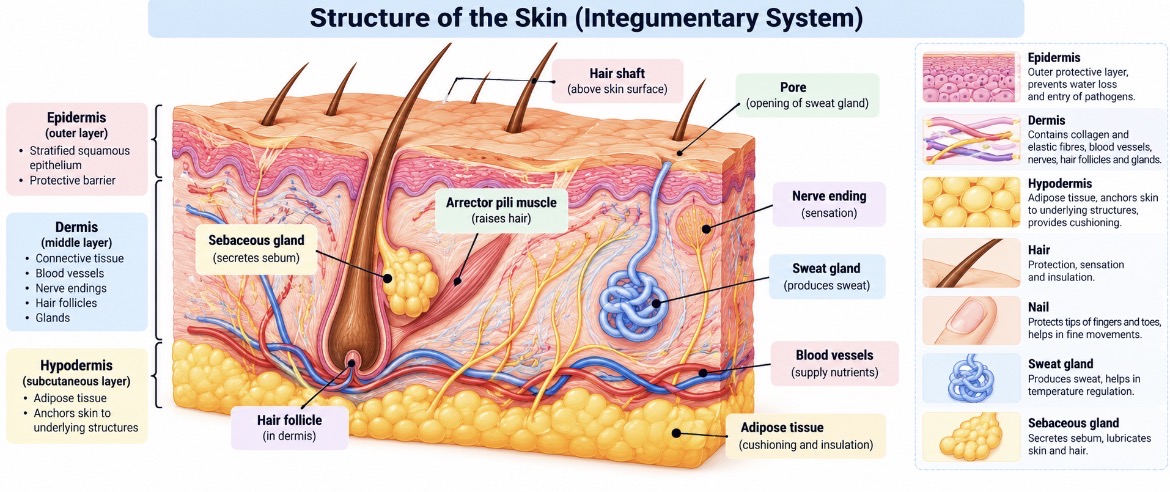
The skin is the largest organ of the integumentary system. It consists of two main layers: the epidermis and dermis. The hypodermis lies beneath the skin and connects it to underlying tissues, although it is not technically part of the skin itself.
1. Epidermis
The epidermis is the outermost layer of the skin. It consists mainly of stratified squamous epithelium and provides protection against environmental damage, microorganisms and excessive water loss.
The epidermis contains cells called keratinocytes, which produce keratin, a structural protein that strengthens the skin.
Melanocytes in the epidermis produce melanin, a pigment that contributes to skin colour and helps protect cells against ultraviolet radiation.
2. Dermis
The dermis lies beneath the epidermis and consists mainly of connective tissue. It contains collagen and elastic fibres that provide strength and flexibility.
The dermis also contains blood vessels, sensory nerve endings, hair follicles, sweat glands and sebaceous glands.
Its blood vessels help regulate body temperature, while sensory receptors help detect touch, pressure, pain and temperature.
3. Hypodermis
The hypodermis, also called the subcutaneous layer, lies beneath the dermis. It contains loose connective tissue and varying amounts of adipose tissue.
Its main functions include:
Anchoring the skin to underlying structures.
Providing cushioning and insulation.
Storing energy in the form of fat.
Important: The epidermis has no blood vessels of its own. It receives nutrients by diffusion from blood vessels in the underlying dermis.
Functions of the Integumentary System
The integumentary system performs several essential functions.
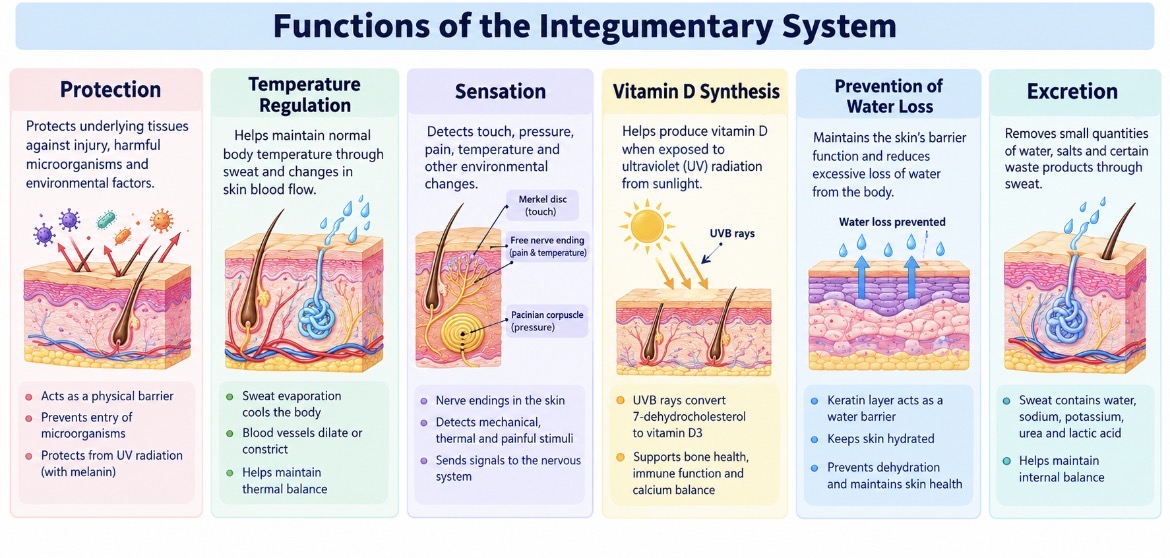
Protection: Protects underlying tissues against physical injury, microorganisms and harmful environmental substances.
Temperature regulation: Sweat evaporation and changes in skin blood flow help control body temperature.
Sensation: Sensory receptors detect touch, pressure, pain and temperature.
Vitamin D synthesis: The skin initiates vitamin D production when exposed to suitable ultraviolet radiation.
Prevention of water loss: The epidermal barrier reduces excessive loss of water from the body.
Excretion: Sweat removes small quantities of water, salts and certain waste products.
Everyday Examples
Sweating during exercise: Sweat evaporates from the skin surface and helps remove heat from the body.
Feeling a hot object: Sensory receptors in the skin detect heat and help initiate a protective response.
Skin healing after a minor cut: Cells in the epidermis and dermis participate in repairing damaged tissue.
Hair and nails growing: Specialized cells produce keratin, which contributes to the structure of hair and nails.
Key Concepts
The integumentary system includes the skin, hair, nails and associated glands.
The skin consists of the epidermis and dermis.
The hypodermis lies beneath the skin and supports its attachment to deeper tissues.
Sweat glands contribute to temperature regulation.
Sebaceous glands produce sebum, which lubricates the skin and hair.
The integumentary system protects the body and supports sensation, temperature regulation and vitamin D synthesis.
In summary, the integumentary system provides a protective covering while helping maintain body temperature, detect environmental changes and support other essential physiological functions.