
Layers of the Skin
Introduction
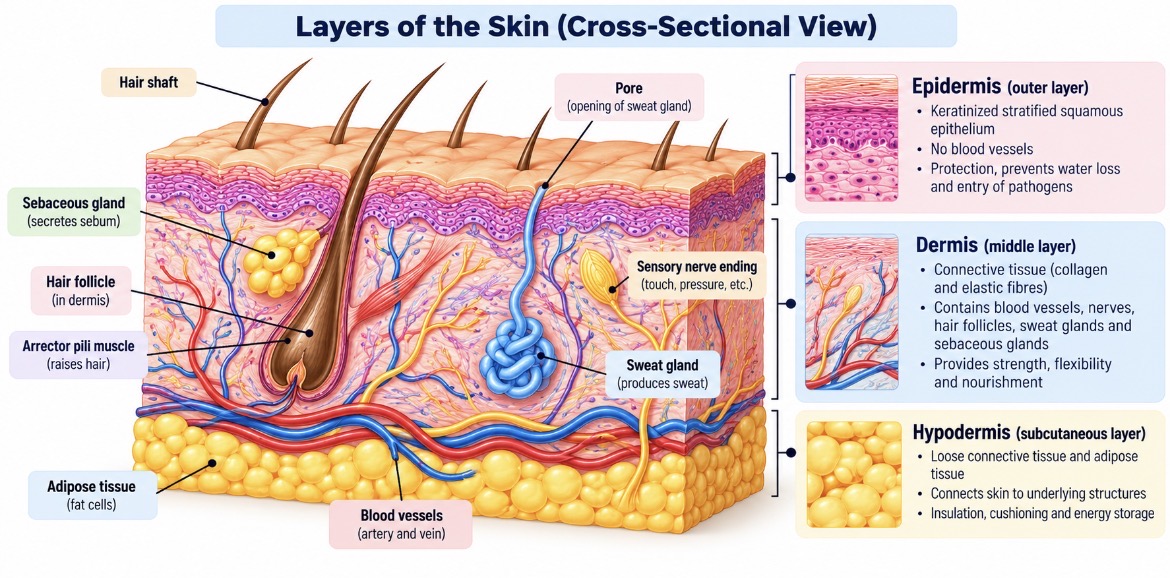
The skin is the body's outer protective covering. Its structure allows it to resist external damage, prevent excessive water loss, detect sensations and help regulate body temperature.
The skin consists of two main layers: the epidermis and the dermis. Beneath these lies the hypodermis, also called the subcutaneous layer, which connects the skin to underlying structures.
For a broader overview of the skin and its role in the body, read Organization of the Skin. (Replace this path with the final article URL if your MediVerse route differs.)
1. Epidermis
The epidermis is the outermost layer of the skin. It is made primarily of keratinized stratified squamous epithelium and acts as a barrier against physical damage, microorganisms and excessive water loss.
The epidermis does not contain blood vessels. Its cells receive oxygen and nutrients by diffusion from the underlying dermis.
Major Cells of the Epidermis
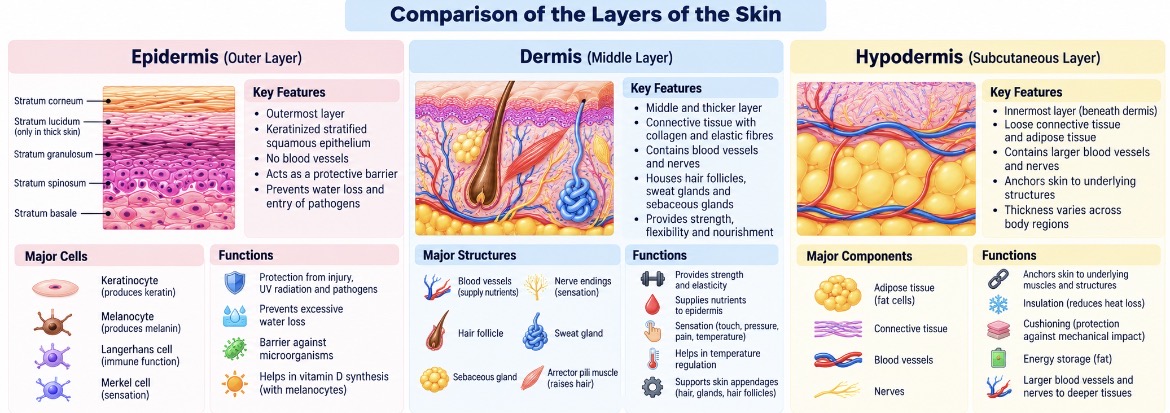
Keratinocytes: The most abundant epidermal cells. They produce keratin, which strengthens the skin and contributes to its protective barrier.
Melanocytes: Produce melanin, a pigment that contributes to skin colour and helps protect cells from ultraviolet radiation.
Langerhans cells: Immune cells that help recognize foreign substances and participate in immune defence.
Merkel cells: Specialized cells associated with sensory nerve endings that contribute to light-touch sensation.
Layers of the Epidermis
From deep to superficial, the epidermis contains the following layers:
Stratum basale: The deepest layer, where new keratinocytes are produced. Melanocytes and Merkel cells are also found here.
Stratum spinosum: Contains several layers of keratinocytes connected by strong cell junctions, helping provide structural strength.
Stratum granulosum: Keratinocytes undergo changes associated with keratinization, and lipids are released that contribute to the skin's water barrier.
Stratum lucidum: A thin, translucent layer present in thick skin, especially on the palms and soles. It is not typically present in thin skin.
Stratum corneum: The outermost layer, consisting of flattened, dead, keratin-filled cells. These cells form an important protective barrier and are continuously shed.
Tip: Remember the epidermal layers from deep to superficial as Basale → Spinosum → Granulosum → Lucidum → Corneum. The stratum lucidum is present in thick skin.
2. Dermis
The dermis lies beneath the epidermis and is made mainly of connective tissue. It provides strength, flexibility and nourishment to the skin.
Unlike the epidermis, the dermis contains blood vessels and nerves. It also houses hair follicles, sweat glands and sebaceous glands.
The dermis has two main regions.
Papillary Layer
The papillary layer is the thinner, superficial region of the dermis. It consists mainly of loose connective tissue and forms projections called dermal papillae that interact with the epidermis.
Its capillaries help supply nutrients to the avascular epidermis, while its sensory receptors contribute to touch sensation.
Reticular Layer
The reticular layer is the deeper and thicker region of the dermis. It consists mainly of dense irregular connective tissue containing collagen and elastic fibres.
Collagen provides tensile strength, while elastic fibres help the skin stretch and return towards its original shape.
The reticular layer also contains many hair follicles, glands, blood vessels and nerve structures.
Real-life example: When skin stretches as you bend your elbow, the connective tissue of the dermis helps it withstand mechanical stress while maintaining flexibility.
3. Hypodermis
The hypodermis, or subcutaneous layer, lies beneath the dermis. Although it is closely associated with the skin, it is not technically part of the skin itself.
It contains loose connective tissue and varying amounts of adipose tissue.
Its main functions include:
Anchoring: Connects the skin to underlying muscles and other structures.
Insulation: Adipose tissue helps reduce heat loss.
Cushioning: Fat provides padding against mechanical impact.
Energy storage: Adipocytes store energy in the form of fat.
The thickness of the hypodermis varies across body regions and between individuals.
Comparison of the Skin Layers
Feature | Epidermis | Dermis | Hypodermis |
|---|---|---|---|
Position | Outermost | Beneath epidermis | Beneath dermis |
Main tissue | Keratinized stratified squamous epithelium | Connective tissue | Loose connective and adipose tissue |
Blood vessels | Absent | Present | Present |
Main structures | Keratinocytes and other epidermal cells | Blood vessels, nerves, hair follicles and glands | Adipose tissue and connective tissue |
Main functions | Protection and water barrier | Strength, flexibility and nourishment | Anchoring, insulation and cushioning |
How the Skin Layers Work Together
The three layers have different but complementary roles.
The epidermis provides the external barrier. The dermis supports the epidermis and contains structures involved in sensation, temperature regulation and secretion. The hypodermis attaches the skin to deeper tissues and provides insulation and cushioning.
For example, when you touch a hot object, sensory receptors in the skin detect the stimulus. Nerves transmit information to the nervous system, which helps coordinate a protective response. At the same time, the epidermal barrier continues to protect the underlying tissues.
Key Concepts
The skin consists of the epidermis and dermis.
The hypodermis lies below the skin and connects it to underlying structures.
The epidermis is avascular and provides the main external protective barrier.
The dermis contains connective tissue, blood vessels, nerves and skin appendages.
The hypodermis provides anchoring, insulation, cushioning and energy storage.
Each layer contributes to the overall protection and normal functioning of the skin.
In summary, the epidermis protects the body, the dermis provides strength and houses important skin structures, and the hypodermis supports the skin beneath it. Together, these layers help maintain the body's barrier, sensation and temperature regulation.