
Introduction
The human body is a highly organized and interconnected system. Although we study organs and organ systems separately, they do not actually work independently inside the body.
The heart, for example, cannot maintain the body's circulation without blood vessels and blood. Similarly, the lungs cannot deliver oxygen to body tissues without the cardiovascular system to transport that oxygen.
When a person exercises, several systems become active at the same time:
The respiratory system increases oxygen intake.
The cardiovascular system increases blood circulation.
The muscular system produces movement.
The nervous system coordinates the activity.
The endocrine system contributes to metabolic regulation.
The integumentary system helps regulate body temperature through sweating and changes in skin blood flow.
This coordinated activity allows the body to perform complex functions while maintaining a relatively stable internal environment.
The human body is commonly organized into 11 major organ systems:
Integumentary system
Skeletal system
Muscular system
Nervous system
Endocrine system
Cardiovascular system
Lymphatic and immune system
Respiratory system
Digestive system
Urinary system
Reproductive system
Understanding these systems is essential before studying their individual anatomy and physiology in greater detail.
What Is an Organ System?
An organ system is a group of organs and associated structures that work together to perform one or more major functions of the body.
An organ system is therefore more than just a collection of organs.
Each organ usually has a specialized role, and the combined activities of these organs allow the entire system to perform a larger physiological function.
Example: Digestive System
The digestive system contains structures such as:
Mouth
Esophagus
Stomach
Small intestine
Large intestine
Liver
Gallbladder
Pancreas
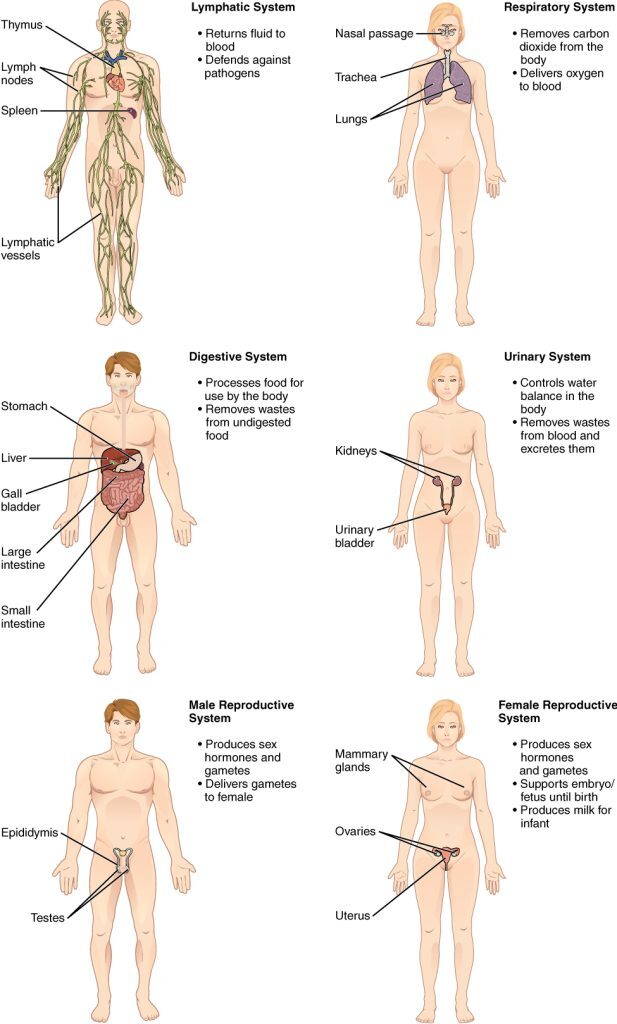
Figure 3.1
These structures perform different functions, but together they help the body:
Take in food → Digest food → Absorb nutrients → Eliminate undigested material
This is the basic idea behind an organ system.
The 11 Major Organ Systems of the Human Body
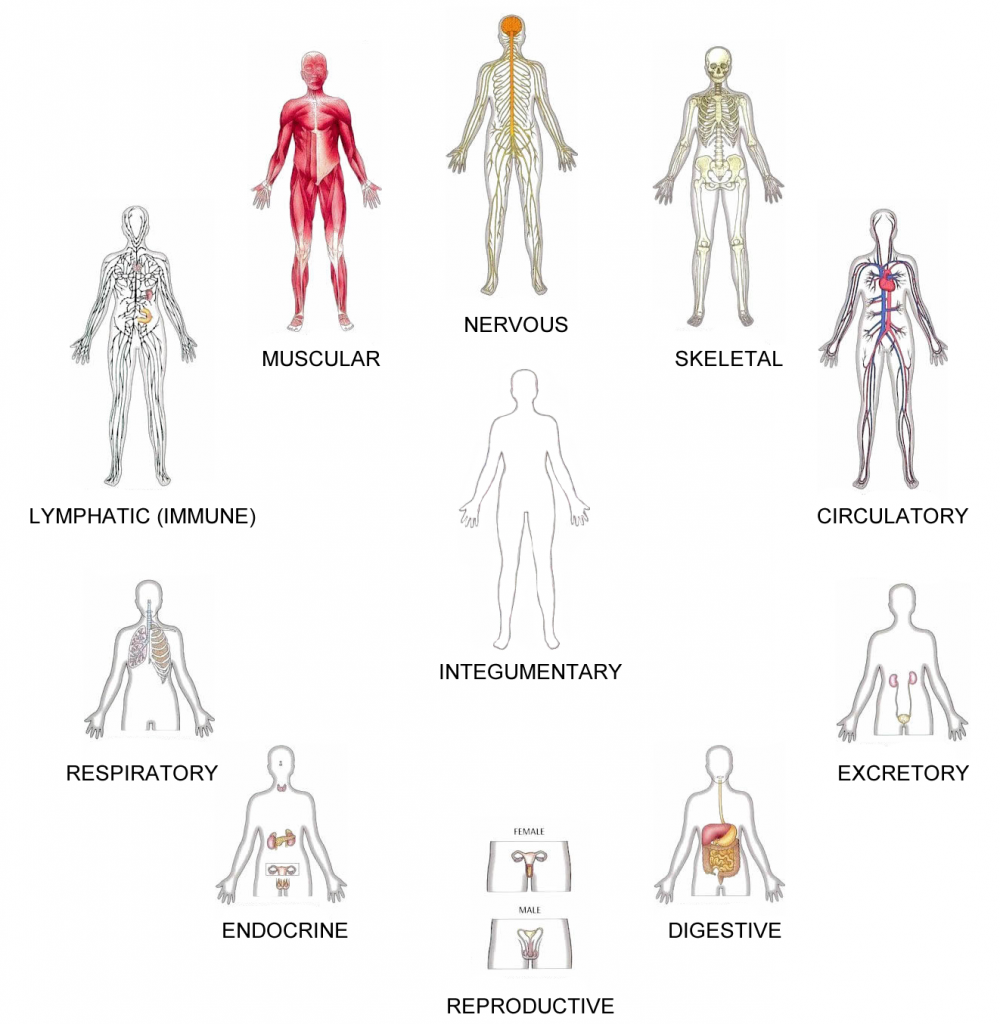
1. Integumentary System
The integumentary system forms the external covering of the body and acts as an important protective barrier between the internal environment and the outside world.
Major Components
The integumentary system includes:
Skin
Hair
Nails
Sweat glands
Sebaceous glands
Major Functions
Protection
The skin protects the underlying tissues from:
Physical injury
Microorganisms
Excessive water loss
Environmental exposure
Temperature Regulation
The skin participates in body-temperature regulation through:
Sweating
Changes in blood flow through the skin
Sensation
Sensory receptors in the skin detect:
Touch
Pressure
Pain
Temperature
Excretion
Small amounts of water, salts, and certain metabolic substances can be eliminated through sweat.
Vitamin D Production
The skin participates in the production of vitamin D following exposure to ultraviolet radiation.
Why Is It Important in Pharmacy?
The integumentary system is important in understanding topical and transdermal drug delivery.
Examples include:
Creams
Ointments
Gels
Lotions
Transdermal patches
The condition and structure of the skin can influence how substances are absorbed through it.
2. Skeletal System
The skeletal system provides the structural framework of the body.
Major Components
It includes:
Bones
Cartilage
Associated connective tissues
The adult human skeleton generally contains 206 bones.
Major Functions
Support
Bones provide a framework that supports the body.
Protection
Bones protect important internal organs.
Examples:
Skull → Brain
Vertebral column → Spinal cord
Rib cage → Heart and lungs
Movement
Bones provide attachment points for muscles and act as levers during movement.
Mineral Storage
Bones store important minerals, especially:
Calcium
Phosphorus
Blood Cell Formation
Red bone marrow is an important site of blood-cell formation.
Pharmacy Connection
The skeletal system is relevant when studying:
Calcium and vitamin D
Osteoporosis
Bone disorders
Drugs affecting bone metabolism
3. Muscular System
The muscular system is responsible for producing movement and contributes to posture and heat production.
There are three major types of muscle tissue:
Skeletal muscle
Cardiac muscle
Smooth muscle
Skeletal Muscle
Skeletal muscles are generally attached to bones and produce voluntary body movements.
Examples include movements involved in:
Walking
Running
Writing
Lifting
Cardiac Muscle
Cardiac muscle forms the muscular wall of the heart.
Its rhythmic contractions help pump blood through the cardiovascular system.
Smooth Muscle
Smooth muscle is found in the walls of many internal organs.
Examples include:
Intestine
Urinary bladder
Blood vessels
Airways
Smooth muscle generally functions involuntarily.
Major Functions of the Muscular System
The muscular system contributes to:
Body movement
Maintenance of posture
Heat production
Movement of substances through internal organs
Pharmacy Connection
Understanding muscle function is important when studying drugs that influence:
Smooth-muscle contraction
Bronchial muscles
Gastrointestinal motility
Neuromuscular transmission
Cardiac muscle function
4. Nervous System
The nervous system is a major control and communication system of the human body.
It allows the body to rapidly detect information, process it, and produce appropriate responses.
Major Divisions
The nervous system is broadly divided into:
Central Nervous System
The CNS consists of:
Brain
Spinal cord
Peripheral Nervous System
The PNS consists mainly of:
Nerves
Ganglia
Associated sensory and motor structures
Major Functions
The nervous system:
Receives sensory information
Processes information
Coordinates responses
Controls movement
Regulates many organ functions
Supports learning and memory
Contributes to consciousness and behavior
Example: Touching a Hot Object
Suppose a person touches a very hot surface.
The sequence can be simplified as:
Heat stimulus
↓
Sensory receptors detect the stimulus
↓
Nervous system processes the information
↓
Motor response is generated
↓
Hand moves away
This allows the body to respond rapidly to potentially harmful stimuli.
Pharmacy Connection
The nervous system is essential for understanding medicines affecting:
Pain
Anxiety
Depression
Epilepsy
Sleep
Anesthesia
Autonomic functions
5. Endocrine System
The endocrine system is an important chemical communication and regulatory system.
It consists of glands and tissues that produce and release hormones.
Major Endocrine Organs and Glands
Important examples include:
Pituitary gland
Thyroid gland
Parathyroid glands
Adrenal glands
Pancreas
Pineal gland
Ovaries
Testes
What Are Hormones?
Hormones are chemical messengers that are released by endocrine tissues and act on specific target cells or tissues.
They help regulate many long-term and coordinated processes.
Major Functions
The endocrine system contributes to regulation of:
Growth
Development
Metabolism
Blood glucose
Reproduction
Stress responses
Calcium balance
Example: Blood Glucose Regulation
After a meal:
Blood glucose increases
↓
Pancreas responds
↓
Insulin is released
↓
Target cells increase glucose uptake and storage
↓
Blood glucose moves toward its normal range
This demonstrates the role of hormones in physiological regulation.
Pharmacy Connection
The endocrine system is particularly important when studying medicines used in:
Diabetes
Thyroid disorders
Hormonal disorders
Adrenal disorders
Reproductive health
6. Cardiovascular System
The cardiovascular system is responsible for circulating blood throughout the body.
Major Components
It consists of:
Heart
Blood
Blood vessels
The major types of blood vessels include:
Arteries
Veins
Capillaries
Major Functions
The cardiovascular system transports:
Oxygen
Carbon dioxide
Nutrients
Hormones
Metabolic waste products
It also contributes to:
Temperature regulation
Fluid distribution
Immune-cell transport
Role of the Heart
The heart is a muscular pump that generates the pressure needed to move blood through the circulation.
Role of Blood Vessels
Arteries
Arteries generally carry blood away from the heart.
Veins
Veins generally carry blood toward the heart.
Capillaries
Capillaries are very small vessels where exchange occurs between blood and surrounding tissues.
Pharmacy Connection
The cardiovascular system is one of the most important systems in pharmacology.
Many drugs affect:
Blood pressure
Heart rate
Cardiac contraction
Blood-vessel diameter
Blood clotting
This includes drugs used for:
Hypertension
Angina
Heart failure
Arrhythmias
Thrombotic disorders
7. Lymphatic and Immune System
The lymphatic system helps maintain fluid balance and works closely with the immune system in protecting the body from harmful organisms and substances.
Major Components
These include:
Lymph
Lymphatic vessels
Lymph nodes
Spleen
Thymus
Other lymphoid tissues
Major Functions
Maintaining Fluid Balance
The lymphatic system helps return excess fluid from tissues to the bloodstream.
Immune Defense
It provides structures and pathways involved in immune responses against:
Bacteria
Viruses
Other pathogens
Abnormal cells
Fat Absorption
Specialized lymphatic vessels in the small intestine participate in the transport of absorbed dietary fats.
Pharmacy Connection
This system is important for understanding:
Vaccines
Immunosuppressive drugs
Antihistamines
Anti-inflammatory medicines
Immunomodulatory therapies
8. Respiratory System
The respiratory system is primarily responsible for exchanging gases between the body and the external environment.
Major Components
It includes:
Nose and nasal cavity
Pharynx
Larynx
Trachea
Bronchi
Bronchioles
Lungs
Alveoli
Major Functions
The respiratory system:
Brings oxygen into the body
Removes carbon dioxide
Contributes to regulation of blood pH
Participates in voice production
Gas Exchange
Gas exchange occurs primarily at the alveoli.
Oxygen moves approximately as:
Alveolar air → Blood
while carbon dioxide moves:
Blood → Alveolar air
Carbon dioxide is then removed from the body through exhalation.
Pharmacy Connection
The respiratory system is important for understanding drugs used in:
Asthma
Chronic obstructive pulmonary disease
Allergic respiratory conditions
Other respiratory disorders
For example, bronchodilators act on airway-related mechanisms to improve airflow.
9. Digestive System
The digestive system processes food so that nutrients can be digested, absorbed, and utilized by the body.
Major Components
Gastrointestinal Tract
Mouth
Pharynx
Esophagus
Stomach
Small intestine
Large intestine
Rectum
Anus
Accessory Organs
Liver
Gallbladder
Pancreas
Major Functions
The digestive system performs several major processes:
Ingestion → Digestion → Absorption → Elimination
Digestion
Large food molecules are broken down into smaller substances.
For example:
Proteins → Amino acids
Carbohydrates → Simple sugars
Lipids → Smaller absorbable lipid components
Absorption
Nutrients are absorbed mainly through the small intestine.
Elimination
Undigested material is eventually eliminated from the body.
Pharmacy Connection
The digestive system is especially important because many medicines are administered orally.
Understanding this system helps explain:
Drug absorption
First-pass metabolism
Oral dosage forms
Gastrointestinal adverse effects
Drug-food interactions
10. Urinary System
The urinary system is essential for removing metabolic waste and maintaining the body's internal chemical and fluid balance.
Major Components
It includes:
Kidneys
Ureters
Urinary bladder
Urethra
Major Functions
The urinary system:
Forms urine
Removes metabolic waste
Regulates water balance
Helps regulate electrolytes
Contributes to acid-base balance
Contributes to blood-pressure regulation
Produces or supports production of substances involved in blood-cell formation and calcium regulation
Role of the Kidneys
The kidneys filter blood and process the resulting fluid through mechanisms including:
Filtration
Reabsorption
Secretion
The final urine contains substances that the body needs to eliminate.
Pharmacy Connection
The kidneys are extremely important in pharmacology because many drugs and their metabolites are eliminated partly or mainly through the kidneys.
Therefore, kidney function can influence:
Drug clearance
Drug concentration
Drug half-life
Dosage requirements
Risk of toxicity
This is why renal function is considered when dosing certain medicines.
11. Reproductive System
The reproductive system is responsible for reproduction and the production of reproductive cells and hormones.
Male and female reproductive systems have different structures and functions.
Male Reproductive System
Major structures include:
Testes
Epididymis
Vas deferens
Accessory glands
Penis
The testes produce:
Sperm
Testosterone
Female Reproductive System
Major structures include:
Ovaries
Uterine tubes
Uterus
Vagina
The ovaries produce:
Oocytes
Reproductive hormones
Major Functions
The reproductive system contributes to:
Production of reproductive cells
Production of reproductive hormones
Fertilization
Reproduction
Pharmacy Connection
Knowledge of this system is important when studying:
Contraceptives
Fertility medicines
Hormonal therapies
Reproductive health
Medicines affecting pregnancy
How Do the Organ Systems Work Together?
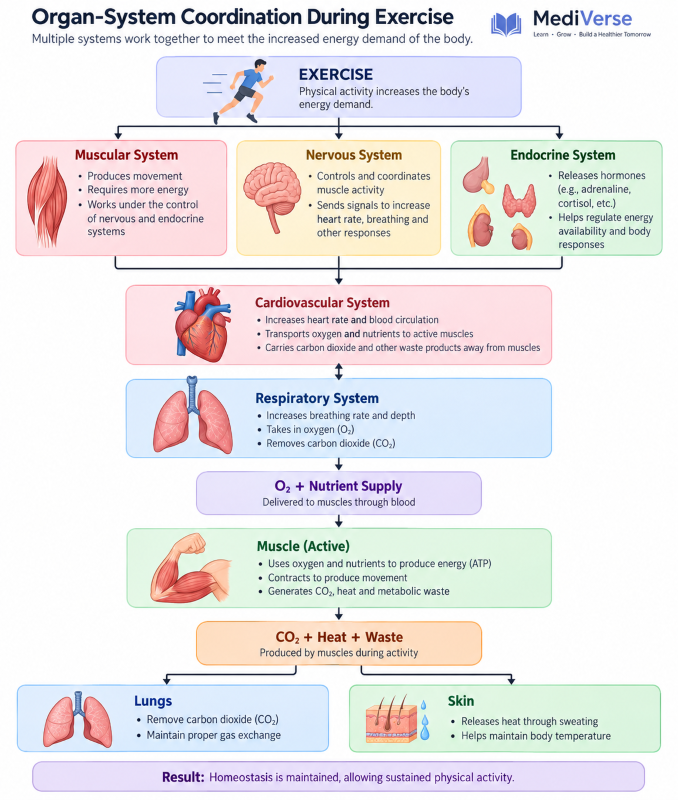
Knowing the functions of individual systems is important, but the more important physiological concept is coordination.
The body does not perform activities by activating only one organ system.
Consider a simple example: exercise.
During Exercise
The muscles require more energy.
↓
The respiratory system increases ventilation.
↓
More oxygen enters the lungs.
↓
The cardiovascular system increases circulation.
↓
More oxygen and nutrients reach active muscles.
↓
Muscles produce more metabolic waste and heat.
↓
The respiratory system helps remove increased carbon dioxide.
↓
The integumentary system increases sweating and contributes to heat loss.
↓
The nervous and endocrine systems coordinate and regulate these responses.
This demonstrates that the body functions as an integrated system rather than as isolated parts.
Organ System and Homeostasis
One of the major goals of organ-system coordination is maintaining a relatively stable internal environment.
This is called homeostasis.
For example, body temperature must remain within a relatively narrow range.
Several systems participate in temperature regulation:
Nervous system detects changes.
Cardiovascular system changes blood distribution.
Integumentary system produces sweat.
Endocrine mechanisms can influence metabolism.
Similarly, maintaining blood glucose involves interactions between:
Digestive system
Endocrine system
Cardiovascular system
Metabolically active tissues
Therefore:
Homeostasis depends on coordinated activity among multiple organ systems.
The detailed mechanisms of homeostasis will be studied separately in the Homeostasis subtopic.
Why Is This Topic Important for B.Pharm Students?
Human anatomy and physiology form the foundation for understanding pharmacology and therapeutics.
A drug may act at a molecular target, but its final effect can be observed at the level of a:
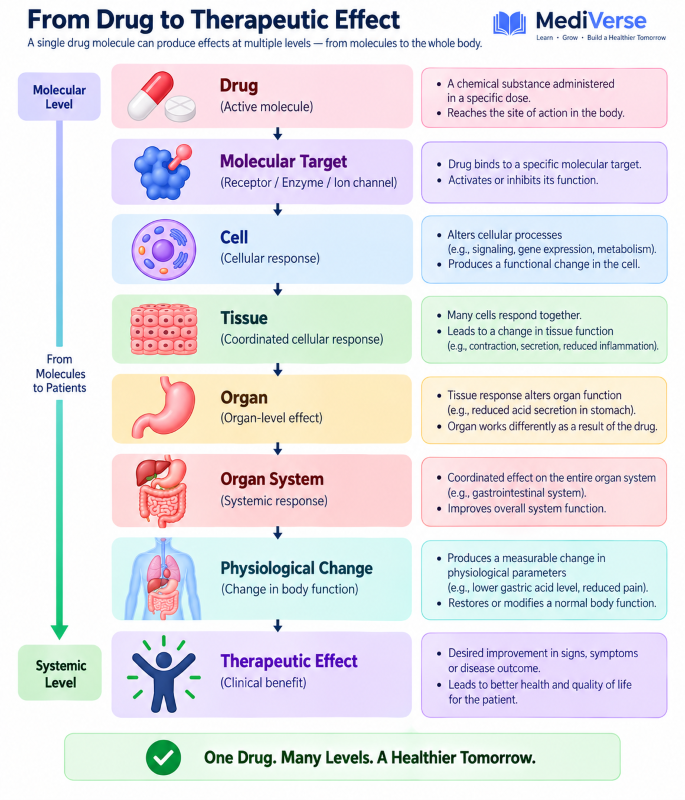
Cell → Tissue → Organ → Organ System → Whole Body
For example, consider an antihypertensive drug.
A drug may interact with a specific molecular target.
↓
Cellular activity changes.
↓
Blood-vessel or cardiac function changes.
↓
Blood pressure changes.
↓
A therapeutic effect is produced.
Therefore, understanding organ systems allows a pharmacy student to connect drug mechanism with physiological and therapeutic effects.
Organ Systems and Pharmacology
Before studying drugs affecting a particular system, a student should understand its normal structure and function.
Cardiovascular Drugs
Need knowledge of:
Heart
Blood vessels
Blood pressure
Circulation
Respiratory Drugs
Need knowledge of:
Airways
Lungs
Bronchi
Alveoli
Gas exchange
Diuretics
Need knowledge of:
Kidneys
Nephrons
Water balance
Electrolytes
Antidiabetic Drugs
Need knowledge of:
Pancreas
Insulin
Glucose regulation
Target tissues
This is why Human Anatomy and Physiology is a foundation for Pharmacology.
Organ vs Organ System
A common student confusion is the difference between an organ and an organ system.
Organ
An organ is a structure made of different tissues that work together to perform specific functions.
Example: Heart
Organ System
An organ system consists of multiple organs and structures working together to perform broader functions.
Example: Cardiovascular system
Therefore:
Heart = Organ
Heart + Blood + Blood vessels = Cardiovascular system
Do Organ Systems Work Independently?
No.
Studying organ systems separately is mainly a way of making anatomy and physiology easier to learn.
Inside the living body, these systems are highly interconnected.
For example:
Respiratory system
provides oxygen,
while:
Cardiovascular system
transports that oxygen,
and:
Muscular system
uses oxygen to support activity.
At the same time:
Nervous + Endocrine systems
coordinate and regulate these processes.
Therefore:
The human body should ultimately be understood as one integrated functional system.
Easy Conceptual Memory Framework
Instead of memorizing the 11 systems as an isolated list, remember their broad purposes:
Protect → Support → Move → Control → Regulate → Transport → Defend → Exchange → Digest → Eliminate → Reproduce
This gives you a conceptual framework for remembering the major systems.
Key Points to Remember
An organ system is a group of organs and associated structures working together to perform major functions.
The human body is commonly described as having 11 major organ systems.
The integumentary system protects the body and contributes to sensation and temperature regulation.
The skeletal system provides support, protection and mineral storage.
The muscular system produces movement and heat.
The nervous system provides rapid control and communication.
The endocrine system regulates body functions through hormones.
The cardiovascular system transports substances throughout the body.
The lymphatic and immune system contributes to fluid balance and defense.
The respiratory system performs gas exchange.
The digestive system processes food and absorbs nutrients.
The urinary system removes metabolic wastes and helps maintain internal chemical balance.
The reproductive system is involved in reproduction and reproductive hormone functions.
Organ systems are interdependent, not isolated.
Their coordinated activity helps maintain homeostasis.
Understanding organ systems is essential for understanding pharmacology and drug action.
Exam-Oriented Questions
1. What is an organ system?
An organ system is a group of organs and associated structures that work together to perform one or more major functions of the body.
2. Name the major organ systems of the human body.
The major organ systems are:
Integumentary
Skeletal
Muscular
Nervous
Endocrine
Cardiovascular
Lymphatic and immune
Respiratory
Digestive
Urinary
Reproductive
3. What are the major components of the cardiovascular system?
The cardiovascular system consists of the:
Heart
Blood
Blood vessels
4. What is the primary function of the respiratory system?
Its primary function is gas exchange between the body and the external environment.
5. What are the major functions of the urinary system?
The urinary system removes metabolic wastes and contributes to regulation of water, electrolytes, acid-base balance and other aspects of internal homeostasis.
6. What is the role of the endocrine system?
The endocrine system produces hormones that regulate processes such as growth, metabolism, reproduction and other physiological functions.
7. Why are organ systems important in pharmacy?
Medicines can affect specific organs and physiological systems. Knowledge of normal organ-system function is therefore essential for understanding drug mechanisms, therapeutic effects and adverse effects.
8. How do respiratory and cardiovascular systems work together?
The respiratory system exchanges oxygen and carbon dioxide, while the cardiovascular system transports these gases between the lungs and body tissues.
Frequently Asked Questions
Is an organ system the same as an organ?
No. An organ is an individual structural unit made of different tissues, whereas an organ system consists of multiple organs and structures working together.
Which system transports oxygen?
The respiratory system obtains oxygen from the environment, while the cardiovascular system transports oxygen through the blood.
Which system removes carbon dioxide?
The respiratory system removes carbon dioxide from the body, while the cardiovascular system transports carbon dioxide from tissues to the lungs.
Which system removes metabolic waste?
The urinary system removes many metabolic wastes, while other systems such as the respiratory system also remove specific waste products such as carbon dioxide.
Why do pharmacy students need to study organ systems?
Because drug actions and therapeutic effects are ultimately expressed through cells, tissues, organs and organ systems. Understanding normal physiology is necessary for understanding what changes when a drug is administered.
Do all organ systems work independently?
No. Organ systems continuously interact to maintain normal body function and homeostasis.
Conclusion
The human body is composed of multiple organ systems, each with specialized structures and functions. However, the most important concept is that these systems do not function independently.
The respiratory system supplies oxygen, the cardiovascular system transports it, the digestive system supplies nutrients, the urinary system removes metabolic wastes, and the nervous and endocrine systems coordinate and regulate many of these activities.